Back to Basics – Lesson #1 Your Resume

backtobasics

After a summer off, I’m excited to relaunch today with a new series devoted to one of everybody’s favorite topics – themselves. Or, more accurately, their career. Lately, I’ve been doing a lot of career coaching and I’ve noticed some things. Not exactly trends, but more like consistent issues.  

As we find ourselves heading into back to school season, I thought it would be fun to go back to basics on your career, too. Hiring hasn’t really slowed down much this summer and we are still a few months away from the end of year dead zone. Now is the perfect time to put yourself out there and find that next great opportunity. If you are thinking about it or you are already in the job market, this series is for you.

Lesson #1 – Your Resume.

The first thing most any hiring manager or recruiter will know of you is what is on your resume. It is important that it tells the best possible version of your career story. Most screeners and recruiters will only spend a couple of minutes looking at it before they decide if you are worth a phone call. The purpose of your resume is to get you that phone call.

While there will always be some subjectivity in any resume review, there are three key elements that will greatly increase the chances of your resume prompting that recruiter or hiring manager to pick up the phone. So pull out your resume and look at it through the eyes of a recruiter. Ask yourself, how clearly do these three elements show up on the page?

Element #1: Focus on Action

Without exception, the most common mistake  on most every resume I read (and I’ve read thousands), is the lack of action or activity. Most resumes tend to read more like job descriptions. They tell the story of the job, but not of the person in the job – you.

As a general rule, the job title you list on your resume will tell me all I need to know about the responsibilities of the role. What I need to know is what you were able to accomplish in that role. Take a look at these examples:

Instead of this… Say this…
Responsible for all aspects of recruiting. Reduced time to fill by an average of  3 days per role.
Provided tier 1 technical support. Increased first call resolution by 15% over six months.
Managed multiple customer accounts. Increased total sales by 20% by growing existing customer accounts.

You get the idea.

The first column is descriptive. The second column is active.

The first column is vague. The second column is specific.

The first column is generic. The second column is personal.

As a recruiter or hiring manager, I care less about what you were responsible for and much more about what you accomplished. Tell me about what you were able to contribute and how you did what you did, not just what your boss told you to do. I need to get an image of how you approach your work. That picture is what helps me determine if you fit into what I have open.

Wherever possible, lead with an action word that describes your result and follow it up with the actual result. And always, always, always write your resume in first person. Experts calls this the human voiced resume. You are telling your story. It is personal. First person makes your storytelling that much stronger.

Element #2: Leverage the Data

Once you lead with the action, wherever possible, you need to incorporate real data into the statements. Please don’t make things up here. This is not the opportunity to “embellish” your resume. Point to actual results and provide the context or time-frame for the data.

For example, “Increased first call resolution by 15%” is a strong statement, but adding the time descriptor, “within six months” makes the statement that much stronger. Context to the data is important. Add just enough to describe the impact.

Why is this important? Because every single business who is looking to hire is concerned about one thing above all others – bottom line results. We know that there are numerous data points reflected in any bottom line, so where did your role influence a metric that ultimately translates to the bottom line? That’s where you want to shine a light.

Data gives your resume weight and credibility. It demonstrates that you understand what drives the business you are a part of. It signals to a hiring manager that you are able to deliver results. That’s what every manager is after in the hiring process, the right person to deliver the right results.

Element #3: Describe the Impact

If there is a secret to the secret sauce of resume writing, this is it. Whatever else you do, you need to be thinking in terms of impact. What is, or was, the impact of your work in a particular job.

If you’re not sure how to describe that, answer the “So What?” question. You were a customer service rep for a big company. So what? What did you do in that role to make an impact on your employer’s business, customers, other employees, or bottom line? The answer to the “So What?” question helps you describe the impact you made. That’s the story you need to tell.

When I read that you were able to increase repeat customer traffic by focusing on customer care and increasing customer satisfaction rates, I learn that you know how to take care of customers. I also learn that you know what will help increase sales for a business. At that point, I can reasonably believe that you will deliver similar results in my position. Even if the positions are not exactly the same, what you’ve accomplished in the past is a reasonable predictor of what you will be able to accomplish in the future.

The more clearly you can describe the impact of your work – of your presence – the more of my attention you will capture. When you capture my attention, I am far more likely to pick up the phone. And if I pick up the phone, you’re one step closer to landing that next gig.

Does Your Resume Make the Grade?

How does your resume stack up? How well do these three elements show up in your story? What could you do today to make it even better?

If you’d like some help, complete the contact form here and request a Resume Review. If you mention that you read the blog, I’ll send you a complementary critique. You can also book one of my other service offerings you can find listed here.

Next week, we’ll turn our attention to search strategy…just how do you know where to send this new and improved resume, anyway?

Get Your Game Face On: 4 Keys to Breaking the Slacker Cycle

Aragorn

Get your game face on. Do you have a game face? Do you know what that is? Game face is that look of focused determination that you see on athletes from Lebron James to Will Durant to Simone Biles to JP. Who’s JP? That’s my son. More about him later.

We all want to be successful. No one wakes up and says, “Gee, I hope I royally screw things up today.” We all want to be named among the best and the brightest. The hardest lesson for any any of us to learn is the one of discipline. The “D” word as I like to call it. This is especially true if, like me, you consider yourself of the creative mindset. Really. We creative types pride ourselves on being outsiders and, well…free.

The Catch-22 of that reality is that to be truly excellent at anything creative requires far more structure and yes, discipline, than most of us ever imagined. Actually, to be truly excellent at anything at all requires discipline. Discipline is what sets the true superstars apart from all the rest of us.

I am an expert in everything it takes to avoid discipline. I’ve personally authored nearly 1,000 excuses as to why I can’t get something done. Well, maybe not 1,000, but a lot. The truth is it’s much easier for me to utter an excuse than it is to admit that I just didn’t do the work I needed to in order to achieve the success I wanted.

Hello-My-Name-is-Slacker

So to help myself move forward and to achieve my dreams, I’m going to own my issue here, publicly, for all the world to read. Hi. My name is Matt. I am a recovering slacker. (Please don’t read that statement as lacking sensitivity. I am deeply sensitive to and respectful of what it takes to overcome any addictive behavior and those men and women who choose that path are perfect examples of what this post advocates.)

There are, from my perspective, research, and observation, 4 keys to breaking the slacker cycle. Each builds on the next.

Key #1: Discipline

Discipline  is the foundation on which the other 3 keys will rest. Easy word to say, difficult habit to develop, and impossible trait to succeed without. If you want to be truly excellent, you have to be disciplined. Structured. Dare I say, organized?

There are those of you who are much more wired for this than others of us. (Notice what I did there?) Some people are just naturally more disciplined. Some people can eat the same thing for breakfast day in and day out with very few exceptions. Some that can schedule their day down to the minute and actually follow through on that schedule.

My son, JP, is a competitive athlete. During the track season, he is incredibly disciplined about what he eats, when he sleeps, what he drinks. Every decision he makes is in service to what will give him the best chance to perform well.

That’s the foundation – what is it going to take for you to perform at the highest possible level? Every choice you make must then serve to meet that goal. What is going to enable you to close the most deals? How will you ensure the highest performance from your team? What can you do today to ensure you hit your bonus at the end of the year? Those are the kinds of questions you need to be asking yourself every day. Then say yes to those things that move you forward and no to everything else. That’s what discipline looks like.

Key #2:Consistency

The next level is Consistency. Once you develop the discipline to work in service to your goal, whatever that is, next you need to work at it consistently. Not just for today or this week, but constantly.

The track season typically lasts from January to May. For those 4 odd months, my son is very consistent. He is in bed early, he is up with enough time to eat and allow that food to digest before he has to be at practice, he works on school work before and immediately after practice, he packs his water and snacks, he makes sure his uniform is washed, he warms up the same way, he cools down the same way, day in and day out. At practice he follows the program laid out for him by his coaches. He works it with the same intensity day in and day out. It’s hard work. He is generally exhausted by the time practice is done. When he doesn’t get something right in practice, he does it again.

This summer, he’s participating in a club team that competes in the Junior Olympics. At his very first practice with this new team, the coach gave them an exercise to do that consisted of running around the full track (400m) in 25m cycles of jog, sprint, float, walk. I noticed at one point that everyone else had stopped, but he was still going. On the way home I asked him about it he said, “Coach said to do 5, I did 5.” By inference, everyone else did not.

That’s discipline and consistency at work.

Key #3: Execution

The next rung up the ladder is execution, getting it done when it counts. Discipline and Consistency prepare  you to execute well. You cannot expect to simply show up the day of a track meet and win. It doesn’t work like that. You have to put the hard work in to be ready to perform the day of the competition.

The same is true for you in your professional and personal pursuits. You can’t just decide to make a call one day and expect the potential client to buy what you’re selling. You have to be prepared. You can’t show up to the job interview and expect that they will hire you without first knowing as much as you can about the job and the company so that you can show you are genuinely curious and concerned.

This is the point where you just need to get it done. If you’ve developed the discipline to focus on what’s important and prepared consistently, then you are ready to execute flawlessly. And repeatedly. Over and over again. Rarely does one client call or one contract change the entire course of your business’ performance or lead to the dream job offer you are hoping for. Duplicate, duplicate, duplicate. Execution is the key that will unlock that door.

Key #4: Excellence

Discipline, consistency, and execution are what lead to excellence. Excellence is a result. It’s the tip of the iceberg. It’s the outcome. It comes last in our list because it comes last.

When Adele took the stage at Radio City Music Hall in the fall of 2015, she didn’t wake up that morning and say, “Hey, think I’ll go sing a bunch of new stuff tonight.” No – she worked at it in the rehearsal studio, the recording studio, and the stage long before the audience were in their seats and the TV cameras were plugged in. Simone Biles didn’t just wake up the best gymnast in the world. She executed flawlessly for a long time. Simone Manuel didn’t just show up that day to win her first gold medal in the pool. You get the picture.

Excellence comes from disciplined, consistent execution.

So the question for you is what do you need to do today to build that disciplined approach in your own life? Where have you faltered in your consistency and need to get back on track? What have you not pulled the trigger on that you need to?

Let’s get after it. So that you get to stand on the medal stand.

18403720_10213242754167116_6395152159876927182_n If you’re interested, this is JP (not what we call him). At the end of his season he captured 3 top 8 finishes in the State of Florida out of 4 events. He’s ranked nationally in those same 3 events. That’s excellence personified. Not that I’m biased or anything…

Stop the Insanity: 5 Strategies for Maintaining Focus

fomo1-1I will admit that I regularly experience an overwhelming sense of FoMO when it comes to my profession. FoMO, or Fear of Missing Out, is a uniquely 21st Century condition. At it’s core, FoMO perpetuates the fear of having made the wrong decision on how to spend one’s time, because one imagines how things could, or should, be different. It’s usually linked to social activities and tied to an near-obsessive use of social media. But I would argue that in our busy, overcrowded world, FoMO can manifest itself in multiple areas.

This was brought into sharp relief for me the other day when I read a post from Liz Ryan called These Ten Policies Are an Embarrassment to the HR Profession . I agreed with some of it. I was baffled by much of it. Liz is a disruptor. I’m actually a fan of her philosophy at The Human Workplace– which I would summarize as keeping the workplace human. Great idea and something I have always been committed to in my 20+ years as an HR leader.

While I support her philosophy, I struggle with some of her messages. And not just hers (I’m not picking on Liz, her piece just happened to be the tipping point for me). I find myself increasingly frustrated and overwhelmed by the ideas that are flying around about what should and should not be allowed, expected, or addressed in today’s workplace. Couple that with the voice of the employment attorney (hint: not necessarily known, as a profession, for their innovation) and what’s your average HR Director to do?

I don’t think this is unique to the world of HR. It applies in multiple arenas: parenting, education, medicine, communications, marketing and advertising, technology…you name it. Insert the specifics of your world here and I’m sure you’ve experienced something similar.

I get it  – there are different types of people and different types of leaders. Some of us are born to push the envelope, relentlessly pursuing and pushing those around us (or dragging them, kicking and screaming) on to the next big thing. Then there’s the opposite extreme, the ones who never vary from their tactics or approach because it has always worked for them in the past and if it isn’t working that’s somebody else’s issue.

Personally, I think I’m somewhere in the middle. I think most of you are, too. I am all for new, but not just for the sake of doing something new. I’m also a big fan of tradition, but only insomuch as that tradition serves a real purpose or a real need.

Maybe you, like me, are finding yourself unsettled by those who are disrupters by nature. After all, our culture today rewards disruption. If you push the envelope, sacrifice the sacred cows on an open flame, or flat out ignore things that you no longer believe to be relevant – you are a hero. I am not opposed to innovation. Neither am I a fan of “throw-the-baby-out-with-the-bathwater” approaches to anything.  

OLYMPUS DIGITAL CAMERA

STOP. THE. INSANITY.

Seriously. It’s enough to make a guy run for the hills (or actively seek out a career change).

I think, though, there is room for the middle ground here. Anything we adopt or bring into our lives or professional practice should exist for one purpose – to move us closer to our vision. We should be incorporating the best of what’s out there in order to get better at what we do, whether that’s as a leader, a homeschool mom, a pastor, or whatever your role in the world.

If, like me, you are trying to learn how to manage the craziness, maybe these approaches will help you.

Turn Off the Internet

In other words, stop reading EVERYTHING that comes out (except this blog, of course). That is far easier said than done, but at the end of the day you do NOT have to read it all nor do it all. Period. You simply have more choices today than at any time in history. If you’re working on multiple new habits or techniques, then stop reading about more for the time being. When you’ve completed some of the transition, then you can start looking around again.

Or file what you’re reading away for another time. Use a tool like Pocket or a site like Pinterest (yes, guys use Pinterest, too) that allow you to save content for future use.

Know Your Business Cold

Whatever your business may be, know it cold. What are you focused on? What drives your success? What are you trying to accomplish? Be crystal clear about what it is that defines success in your endeavor. This is critical for your filtering mechanism. Once you have that down, you should be able to quickly identify when an opportunity, technique, or idea will help you achieve that success or take you in a different direction. If it isn’t moving you towards success, get rid of it. Do not give it any attention.

See the Truth

Be realistic about what’s working or what’s not working as it relates to your goals. Especially if what’s not working happens to be you! By honestly knowing yourself and what you are and are not willing to adjust to move forward, then you know what to pay attention to and what you can ignore. Don’t make a decision on the basis of what you want to be true, make it on the basis of what is actually true about your capability, your circumstances, your time, your family, etc.

Craft Your Vision

What does your future look like when you add that new technique or change how you do what you do? If you were the exact leader you most want to be, what does that look like? When you release your kids into the world, what kind of people do you want them to be? Where is all of this going? Write it down. Then, if you’re reading the latest blog or “research” you’ll be able to tell pretty quickly if it can help move you towards your vision.

By the way – I’d love to help you work through and create this vision. Just click on contact and let’s talk about it.

Be Realistic

Contrary to popular belief, you really can’t do more than one thing at a time. And you really can’t focus on a lot of different projects all at once. This tip is closely related to seeing the truth. You need to cut yourself some slack and understand what you can and cannot take on at any given moment. Sometimes, the answer has to be – not yet. Finish some things before trying to tackle others. No one can do it all, no matter what popular culture would have you believe.

Keep Moving the Needle

Slow and steady wins the race. Always. Because, really, the only person you are racing against is you. Whether you are trying to get better at something, change a habit or behavior, or accomplish your life’s purpose, the only competition is yourself. You may not be able to affect change quickly, but you can change SOMETHING. Do that and move forward. Eventually, you will get it done.

Start now. Or better yet, stop now. Don’t ponder. Take one action, right now – before clicking off this page – to stop the insanity in your world. Then tell me about it in the comments below. I’d love to hear your ideas and how it’s going for you.

For additional information, check out Michael Hyatt ‘s new site, Free to Focus.

Running the Race: 4 Lessons About Coaching I Learned Watching My Son Become a Runner

Default_Olympic_Rings_news_featured

Sooo….as I type this, the Rio Olympics have come to a close. I’m so excited that I can now sleep again. I’ll admit it. I’m an Olympics junkie. I have spent much of the last two weeks in a self-induced Olympics hangover. It’s a thing.

It is the result of staying up far too late and expending a great deal of emotional energy cheering on these amazing athletes as they pursue their dreams. And while I will drop the name of Michael Phelps here in a blatant and shameless attempt to attract attention, I have many other favorite moments.  Among them, in no particular order….Simone Manuel’s win in the 100 fly, David Boudia and Steele Johnson, the women’s 4×100 and 4×400 relay teams, Ashton Eaton and the decathlon, Katie Ledecky, Maya Dirado, and even Usain Bolt – truly poetry in motion.

Watching the Olympics this time has been a different experience because I now watch Track and Field through new eyes. I’ve always enjoyed the Decathlon and the Heptathlon (Jackie Joyner-Kersee anyone?) But things changed this year because of my son.

You see, my son is a runner.

He’s always been athletically inclined and he’s always been quick on his feet. How many times when he was a toddler did I think, “Why did we ever teach him to walk?” But he walked at 10 months old and never looked back.

Now that he is on the threshold of high school, running has taken on a whole new meaning for him and for our family. It started last fall with Cross Country. Then, he became a three event competitor in Track and Field including running anchor on the 4×400 relay (the penultimate event at scholastic Track Meets). In fact, he ended up competing in two events at the state Middle School Championship in his very first season.

I have to tell you that I’ve heard phrases like, “Run your race” and “Finish strong” my whole life. But unless and until you are a competitive runner – or watching your kid become a competitive runner – you have no idea what that means. At any given moment I have experienced a plethora of emotions: concern, worry, fear, pride, struggle, joy. Tears of relief. Tears of joy. Tears of pride. It’s unnerving. I’m more at ease now than I was when we started this journey, but it’s still hard.

I have learned a lot about coaching from watching how he has been coached in this, his first year of truly competitive athletics. Years ago, my brother-in-law, an NCAA competitive running coach, told us to let our son just play. There will be time to coach him when he’s older. For now, just let him hold on to his love of running.

It was good advice. We heeded it. Over the years he’s played soccer, basketball, and t-ball – he even swam one season in a rec league – and just let him love it. So when the opportunity came for him to be able to run Cross Country last Fall – he was ready. He made the choice.

I have learned four great lessons from watching his coaches this past year. Lessons that are important reminders for myself as a coach. They are also important insight into what you can expect from a coach, what you should expect from a coach. They are great leadership lessons.

Here is what his coaches did so well:

Lesson #1: Met Him Where He Was

First and chief among the lessons was that his coaches met him where he was. My son had never been a competitive runner before. He had never trained consistently for anything like this. His coaches understood that and started slowly. Placing him in situations where they could just see what he was capable of.

They didn’t push him too far, or expect too much from him.

That’s the mark of great coaching. A great coach should meet you where you are. Your coach should take the time necessary to understand the current state. I like to focus on this during the discovery session with new/prospective clients. Usually, my clients will offer this with very little prompting, but a few well crafted questions can really help. Some of the types of questions you might want to be prepared to answer:

  • What is it that has encouraged you to seek out the help of a coach?
  • What are some of the situations that you have experienced that you are concerned about?
  • What are you hoping to accomplish in your coaching?
  • What’s happening now?
  • What are you noticing?

Establishing a baseline for current state is important. But it is equally, if not more important,  to define where you’re going.

Lesson #2: Did Not Let Him Stay Where He Was

Once his coaches got a sense for where he was, they very quickly began to move him forward. They didn’t leave him where he started. They challenged him to move just a little bit faster or just a little bit farther. It’s amazing to watch how quickly success begins to come with just the right amount of encouragement.

When you work with a coach, you should expect and be prepared for being challenged and pushed. Otherwise, what’s the point? One of the most effective ways I have found to make that happen is by simply asking the question: what do you want?

The goal of any coaching relationship is to move beyond where you are to where you want to be. Asking what do you want may seem really simple, but it’s not. Now, it is important to hold on to the idea that this is about you…not about anyone else. I will occasionally encounter clients whose answer to the question is focused on someone else. “I want them to stop.” or “I want my boss to do this or that.”

The problem with that is you can’t control what other people do. You have to focus on what you can do in order to achieve your success. I’m amazed how many times I encounter clients who can’t answer this question. They really don’t know. If you don’t know what you want, how will you ever get it?

Lesson #3: Made Small Adjustments

Once they started him moving forward, it became clear what he needed to do differently. His coaches began to help him make small adjustments. How to stand properly at the start, how to arc over the high jump, how to lean into the hurdles. All of those little things can make a huge difference in performance.

When you work with a coach, they will often need to help you reframe your thinking in order to help you move toward your goal. My goal is always to create a new space for a client to walk into. Small adjustments can reap big results. A different response to being questioned. A different way to handle conflict. A different perspective on another person’s behavior.

Many times, all you need is to make one small change to reap huge results. In my son’s case, I remember when he started running hurdles and he was frustrated that he wasn’t running faster. (One thing to know is that he hates to not be good at something. If he can’t do it well quickly, he doesn’t really want to do it at all. It’s a work in progress.) As he voiced his frustration at practice one day, his coach watched him run the hurdles and said just two words, “Don’t jump.” In other words, don’t try to jump over the hurdles because that motion causes you to straighten up. Just lean into it and extend your stride. Then you move quicker.

He made the change and saw an immediate improvement. Small moves, big rewards.

Lesson #4: Celebrated His Success

As the seasons progressed, both Cross Country and even more so – Track and Field, my son began to experience success. Faster times, qualifying for the state meet, personal bests, team records broken. Every one of these wins brought increased confidence and happiness from our son, sure. That success also brought about celebration from his coaches.

No one was more thrilled when he cleared the high jump bar at 5’2” to qualify for States than his coach. No one was more proud of his “Most Improved” team award (given by his teammates, most of whom were older and much more experienced) than his coach, and no one celebrated any louder than the coach when his relay team crossed the finish line in the final meet of the season under 4 minutes – setting a new team record and qualifying for the state meet for the first time in team history – than his coach.

I spent the last year of sports watching, for the first time, as other people poured into my son. Challenging him to be better, stronger, and faster. Encouraging him when he did. Helping him when he struggled. And above all, loving him well.

Your coach should be invested in you as an individual. Your coach should care deeply about your success. Your coach should celebrate that success along with you.

Watching my son being coached well inspired me. I want to be a better coach. I am working hard to take my own advice and make sure these four lessons are present in my practice.

What’s your coach doing for you?

The results will speak for themselves – like this kid, who wasn’t able to finish his first meet a year ago because he got tripped up and wrenched his knee to finishing second. 

Second Place

Second Place


What would you add to the list? What else stands out for you as the marks of great coaching? Leave a comment below and let’s talk about it.

Dropping Things…And Picking Them Back Up

I read this great post from Tricia Lott Williford recently. In it, she quotes T.D. Jakes saying, “The art of managing a lot of things is to never drop the same thing twice in a row.” That’s a great quote.
elfic-the-juggler
I’ve dropped a lot of things in my day. Like this blog, for instance. It’s been a nice long summer. I would love to tell you that was intentional and that I took advantage of that time to reset and refocus and I’m cueing up a long line of posts to astound, enrich, and amaze you. That would be a lie, however.
The truth is, I dropped the ball. Life got busy. I got stuck in the middle of my own small dramas, and I took my eye off the bigger picture – off the larger goal and story. As a result, I’ve let the blog sit here idle for too long.
I am convinced, however, that this is something I’m supposed to be doing and so I will pick it back up and start letting some other things drop. Things like doubt, worry, and distraction. I will also pick up grace and keep moving forward.
So here’s what’s coming – a new post about coaching inspired by my son the runner and energized by watching the Olympics, some more Friday Thoughts on Faith, and a new feature – Wellness Wednesday – where I will attempt to bring multiple aspects of my life and passion together in one place.
I will also #lookdeeper at the reasons behind allowing my voice to go silent in these months and unpack that with you as well.
Ready to pick it up and keep going? Let’s do this…

3 Reasons You Should Consider Working With a Coach in 2016

My very first blog post, Work In Progress  is still a pretty good one.

As we look down the barrel at 2016, this idea is top of mind for a lot of us. I know that I’m still a work in progress and I trust you are too.

Maybe you’re looking back at 2015 and thinking about how much progress you’ve made. Maybe you’re looking back at 2015 and thinking about how much progress you haven’t made. Whichever side of the coin, the truth is a new year offers a natural opportunity to take stock, make plans, and dream big about the life you want for the year ahead.

As you do that, I hope you’ll consider engaging with a coach to help you move closer to where you want to be. Here’s why:

  • A coach will champion you in an act of absolute belief in who you are and in what you are capable of (with thanks to Karen Kimsey-House). A coach wants you to succeed. They are fully in your corner and committed to helping you reach your potential. Not to mention, unless you’ve been working with them for years, they likely have no history to attach to your goals for coaching. That means for them, it isn’t the 10th year in a row you’ve attempted to lose those 25 pounds or finish grad school or whatever (fill in the blank___________). And that means they will work from a clean slate.
  • A coach will ask you the tough questions. Because they are your champion and they are committed to your success, they are going to hold up the mirror in front of you. They are going to be sure you see things as they are, not as you hope they might be. Your coach is going to explore your goals and behavior in relation to those goals from every possible angle, all with a focus on creating the space and clarity you need to move forward. They will do it well.
  • A coach will hold you accountable, but will not manipulate your emotions. Yes, your coach is committed to YOUR success. The emphasis is on the word YOUR for a reason. Your coach isn’t going to live your life for you. They can’t do that. Only you can do that. Your coach will help you find clarity, help you decide, but only you can act. Your coach can also help you understand why you don’t act, when you could. But they will not make it about them, they will not express disappointment or frustration or judgment. You coach will simply ask, “What will it take for you to make the next move?”

Engaging a coach is worth it. You owe it to yourself to consider your options and determine what’s the best investment you can make in yourself for the year ahead.

Here are some great resources for helping you locate a coach:

International Federation of Coaches

Co-Active Coaching Network

You can also click here and explore options for working with me, the Look Deeper Coach (as your coach or to help you identify the right coach for you). Including this special offer.

May the year ahead bring you more than you can ever ask or imagine in every area of your life.

Happy New Year!

Happy New Year 2016 replace 2015 concept on the sea beach

Signs and Maps: What is Coaching Part 1

Signs are important. Signs help us find things. Signs help us find our way. I love signs. Many a sign has saved me miles of aggravation at just the right time.

Since launching lookdeepercoaching.com, the question I am asked more frequently than any other is, “What kind of coaching do you do?” I thought that was a question worth exploring here on the blog. This is the first in a series of posts that will attempt to answer the question, “What is coaching?” from my perspective. Signs, if you will. Or a map.

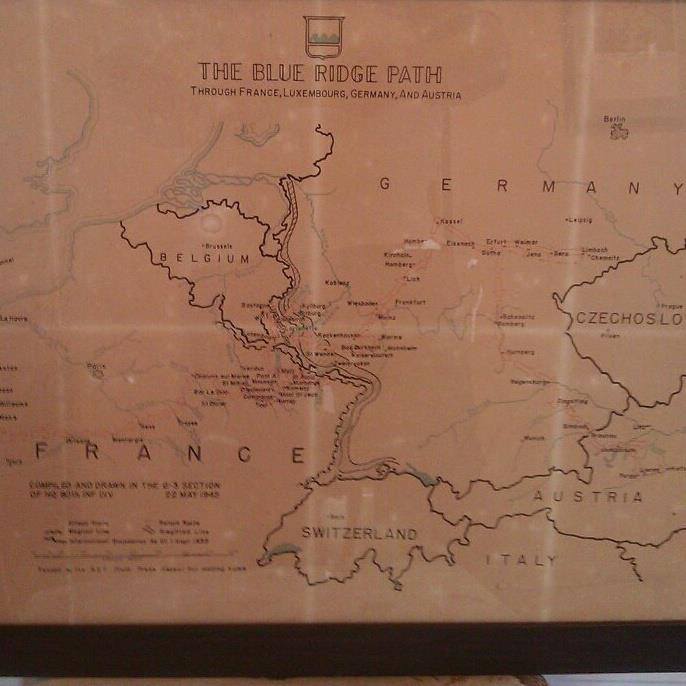
I happen to love maps. In fact, I own a map that is one of my most treasured possessions. It is a map that my grandfather sent/brought home from World War II and for as long as I can remember hung in the guest bedroom of my grandmother’s house. It traces what’s known as the Blue Ridge Path and shows the movement of my grandfather’s division through Europe. I’ve kept it hanging in my office for many years and a few years ago, a co-worker of mine reframed it for me. Currently, it hangs in our master bedroom. Isn’t is cool looking?

(You can find out more on The Blue Ridge Path here: http://www.loc.gov/exhibits/treasures/homefront-maps.html)

(You can find out more on The Blue Ridge Path here: http://www.loc.gov/exhibits/treasures/homefront-maps.html)

One of the reasons I love maps is that they paint a picture. They show you where you want to go and they show you how you can get there. This appeals to my visual brain very much. And yes, I drive with the POV view on my GPS app. It’s important to know where you are going. It’s important to have a clear vision.

Driving down the street recently, I saw this on the sign outside an office building, “Vision without execution is just hallucination.”

It’s an interesting thought. One that even sounds and feels true. But I wonder… The more I marinate on this, the less confident I am in it’s veracity.

I certainly appreciate the sentiment that if you aren’t taking action, then you aren’t moving toward a vision. We definitely live in the age of motion. We wear our busy lives like a badge of honor or a cloak of identity. Be honest. Don’t you think that people who aren’t as busy as you have something wrong with them? (For a great read on this, check out Michael Hyatt’s take here:You don’t have to work 247 )

What if, though, execution is a result of vision, not a means to an end? Execution could be seen as an outcome in that paradigm. Isn’t execution without vision merely activity?

Perhaps I am splitting hairs.

There is something of the proverbial chicken and egg conundrum here, isn’t there? Which comes first, the vision or the execution? Crafting a clear and compelling vision requires work. Executing on that vision, once crafted, also requires work.

I think I’m getting lost in my own circular reasoning here. This is the point at which having a coach could prove to be helpful. My coach would help me sort through the conflicting ideas by asking me powerful questions and reflecting my own words back to me so I really hear what I sound like. A skilled coach would help me stretch my thinking and push me past the point of being stuck and help me to #lookdeeper. My coach would make it possible for me to move forward.

So that’s lesson 1 in What is Coaching? Coaching is an outside perspective on an internal landscape. The best coaches know they are merely guests and will simply point out what they see. It’s your landscape after all. It’s up to you what you do with it.

Intrigued? Interested? Contact me here: Contact or drop a line to info@lookdeepercoaching.com